The Neck Neglect Epidemic: Why Skincare Cannot Stop at the Chin
In aesthetic medicine, it is a proven truth: your neck reveals your biological age a decade faster than your face.
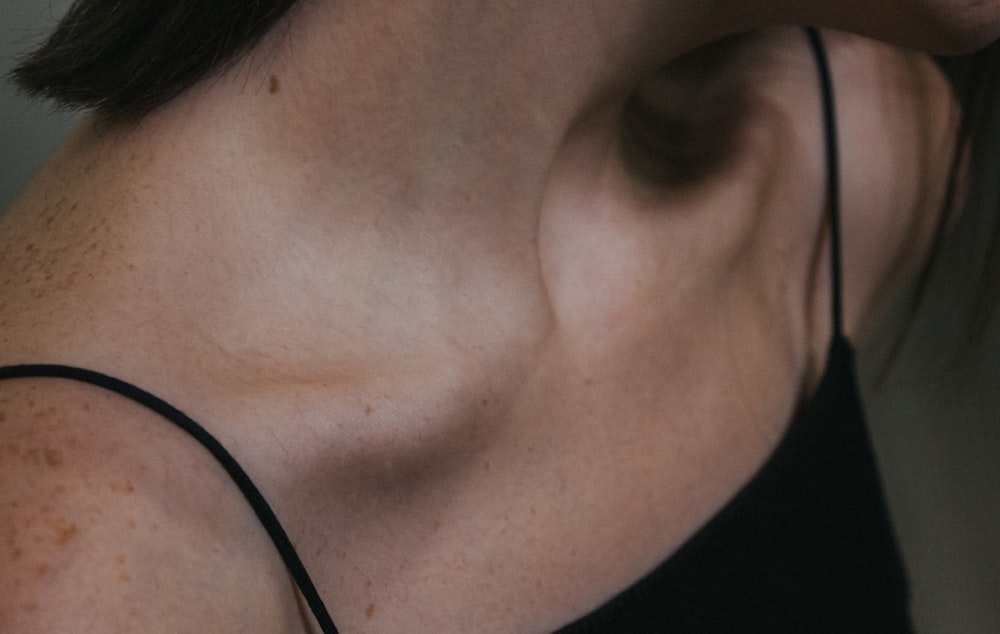
Clinical photobiomodulation targeting the platysma muscle and delicate cervical dermal layers.
Executive Brief: Why Neck Skincare Fails
- Anatomical Vulnerability: Cervical neck skin has 30% fewer sebaceous (oil) glands and a significantly thinner epidermal barrier than facial skin.
- The Retinol Paradox: Potent anti-aging retinoids that firm facial skin frequently trigger severe peeling, redness, and barrier breakdown when applied to the neck.
- The "Floating Head" Flaw: Treating only the face results in a sharp, mismatched border where a glowing face rests atop a creased, sun-damaged neck.
- The Phototherapy Solution: Non-thermal 830nm Near-Infrared light penetrates deep into the platysma muscle to rebuild collagen without chemical peeling.
In Harley Street consultation rooms, cosmetic dermatologists encounter the same patient complaint every single day: "My face looks 35, but my neck looks 50." This phenomenon—widely known as the Floating Head effect—is the predictable result of treating skincare as a face-only ritual while completely ignoring the neck and décolletage.
The skin covering the anterior triangle of your neck is biologically unique. It is less than one-third the thickness of cheek tissue, contains minimal fat cushioning, and possesses virtually no sebaceous glands to maintain a self-hydrating lipid barrier.
1. The "Tech Neck" Crisis of Modern Life
The human head weighs approximately 5 kilograms in an upright position. When tilting forward at a 45-degree angle to look at smartphones or laptops, the gravitational load exerted on the cervical spine and platysma muscle skyrockets to over 22 kilograms.
This continuous mechanical creasing rapidly breaks down elastin strands, forming deep transverse bands (horizontal neck rings) and submental skin laxity ("turkey neck") in individuals as young as 28.
2. Why Chemical Actives Often Backfire on the Neck
When consumers notice neck wrinkling, their first instinct is often to apply their strongest facial products—such as 1% retinol, glycolic acid, or concentrated vitamin C. On the delicate neck, however, this frequently induces chronic low-grade contact dermatitis.
Because the neck skin has fewer lipid-producing glands, harsh exfoliants strip its natural moisture mantle, accelerating collagen fragmentation rather than repairing it.
3. Near-Infrared Photobiomodulation: The Non-Invasive Cure
This biological sensitivity is precisely why Near-Infrared (NIR) 830nm light therapy has become the dermatologist standard for cervical rejuvenation. NIR photons bypass the fragile epidermal layer entirely, delivering cellular energy directly into the fibroblasts of the reticular dermis and the fibers of the platysma muscle.
Clinical trials demonstrate up to a 36% increase in cervical collagen density after 8 weeks of consistent light therapy—with zero peeling, redness, or downtime.
4. The Legacy Brand Pricing Trap: Avoid Separate Neck Attachments
Frustratingly, 80% of legacy silicone mask brands (such as CurrentBody and Omnilux) only cover the face, forcing consumers to spend an extra £280 to £350 on an awkward, separate neck bib.
The newest generation of clinical LED devices integrates a dedicated, articulated neck and chest panel standard. By treating both the face and cervical triangle simultaneously with matching irradiance, users achieve a seamless, uniform rejuvenation result from forehead to collarbone.
Buudy 7-Colour LED Mask with Integrated Neck Array
Unlike legacy single-piece masks that stop at the chin, Buudy includes a clinical-grade neck and décolletage shield at no extra cost. Delivering 7 calibrated spectra and deep 830nm NIR restructuring across 400+ precision diodes.
Direct clinical pricing • 30-day money-back guarantee • Free UK shipping.
Related Investigations from The Edit
Why The Flexible Silicone LED Mask Trend Is Failing Patients →
The optical physics behind why flexible rubber masks scatter light and trap bacteria.
Photobiology ScienceIs Near-Infrared (NIR) Light Actually Safe For Daily Facial Use? →
The safety mechanics of invisible 830nm wavelengths and cellular ATP production.