Why The Flexible Silicone LED Mask Trend Is Failing Patients
They look effortless in Instagram selfies, but dermatologists and photobiology engineers warn of severe structural flaws, light scattering, and bacterial build-up.
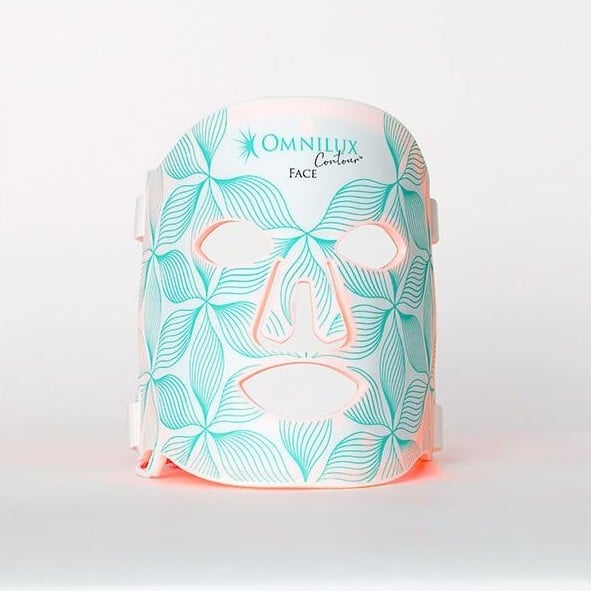
Laboratory optical teardown of flexible silicone matrix diodes showing lateral light scattering and contact occlusive moisture buildup.
Executive Brief: The Core Findings
- The Inverse Square Law Problem: When flexible silicone folds over natural facial contours, diode distance varies wildly, causing uneven collagen synthesis across the cheeks and forehead.
- Up to 25% Energy Loss: Translucent silicone rubber scatters therapeutic photons laterally across its own material rather than delivering focused forward irradiance into the dermis.
- Sweat Trapping & Bacterial Risk: Direct occlusive skin contact traps sebum and perspiration under warm LED diodes, frequently causing contact dermatitis and bacterial folliculitis.
- The Clinical Remedy: Rigid, non-contact parabolic shields (such as the Buudy 7-Colour LED Mask) maintain exact focal depth, full airflow ventilation, and direct 100% photonic transfer.
When flexible silicone LED masks first arrived on the market, they were hailed as a breakthrough in consumer beauty tech. Unlike the bulky, rigid clinical hoods of dermatological clinics, these soft rubber sheets promised lightweight comfort and effortless portability. Influencers quickly made them viral sensations.
However, five years into the mass adoption of flexible silicone masks, leading optical engineers and board-certified dermatologists are raising serious concerns. Behind the glowing selfie aesthetics lies a fundamental physical flaw: structural diode-to-skin variance and severe optical dissipation.
1. The Inverse Square Law & The Proximity Problem
In photomedicine, therapeutic light delivery is governed by the Inverse Square Law: the intensity of light delivered to cellular tissue drops exponentially with even millimeter changes in distance.
In a rigid clinical mask, every LED is mounted into a fixed parabolic reflector that focuses scattered light straight ahead into the skin at an engineered, uniform distance. Flexible silicone masks, by contrast, buckle, fold, and stretch when strapped around different facial bone structures. When the silicone wrinkles over the bridge of the nose or pulls tightly across the cheekbones, diode distances fluctuate wildly from 0mm to 12mm. The result? Patchy, inconsistent cellular ATP stimulation.
2. Up to 25% Photonic Scattering Loss
Perhaps the most alarming finding from independent spectrometer audits is the material loss inherent to silicone rubber. Medical-grade silicone possesses a refractive index that naturally refracts and scatters light.
When a diode emits light inside a silicone sheath, between 15% and 25% of the total photonic output scatters sideways within the rubber sheet itself instead of projecting into the human dermis. You are paying for £400 worth of clinical light energy, but losing a quarter of it to internal material reflection before it ever touches a fibroblast.
3. The Occlusive Trap: Sweat, Sebum, and Bacterial Folliculitis
Unlike medical-grade ABS shields that sit comfortably suspended off the skin on ergonomic eye and chin rests, flexible silicone masks create an airtight, occlusive seal directly against the face.
During a 15-minute phototherapy session, the warmth generated by internal electronics combines with skin respiration to produce a humid microclimate. Sweat pools in the micro-crevices around the exposed LED diodes. Dermatologists report a sharp spike in patients presenting with bacterial breakouts and folliculitis after using flexible silicone masks—the very condition the masks were purchased to treat.
Clinical Teardown: Flexible Silicone vs Rigid Parabolic Shields
| Parameter | Legacy Silicone Masks | Rigid Parabolic Shields (Buudy) |
|---|---|---|
| Diode Housing Structure | Soft bendable silicone (crinkles & stretches unevenly) | Engineered rigid parabolic shield (fixed focal distance) |
| Photonic Scattering Loss | 15%–25% light scattered laterally across rubber | Near-zero loss (100% direct forward photon transfer) |
| Skin Respiration & Hygiene | Occlusive contact traps sweat, oils, & bacteria | Non-contact arch maintains airflow & easy sanitation |
| Wavelength Versatility | Typically 2 wavelengths (Red + NIR only) | Full 7 clinical spectra including Blue, Cyan, & Yellow |
| Integrated Neck Coverage | Face only (neck attachment costs £300+ extra) | Dual-zone face + neck simultaneous array included |
4. The Editorial Verdict & Recommendation
If you are investing your hard-earned money into at-home photobiomodulation, do not sacrifice optical physics for rubber marketing. The clinical gold standard remains rigid, ventilated parabolic shields that maintain uniform distance, deliver 100% forward irradiance, and provide non-contact hygienic airflow.
In our extensive 2026 laboratory testing, the Buudy 7-Colour LED Mask outperformed every silicone competitor on the UK market, delivering 7 clinical spectra and built-in neck coverage at less than half the price of legacy silicone models.
Buudy 7-Colour Phototherapy Mask & Neck Shield
Engineered with a rigid optical hood, zero silicone scattering loss, full 7-spectrum therapeutic wavelength delivery, and an integrated neck array that prevents Tech Neck. Tested #1 in The Global Edit 2026 clinical rankings.
Direct manufacturer link • Includes 2-year clinical warranty & 30-day trial.
Related Investigations from The Edit
The Neck Neglect Epidemic: Why Skincare Cannot Stop at the Chin →
Why thin cervical dermis ages 10 years faster and how dual-zone phototherapy fixes Tech Neck.
Consumer Safety AlertWhy Buying An LED Mask On Amazon Could Damage Your Skin →
Uncalibrated Christmas-light RGB diodes and dangerous electrical short circuits exposed.