The LED Density Scam: Is Your Expensive Mask Actually Treating Nothing?
When consumers invest £400 in a luxury LED face mask, they rarely inspect the diode count. Optical bioengineers reveal how sparse 60-bulb arrays create massive "dead zones" that fail to stimulate collagen.

Dr. David Lin, PhD
Photobiology Bioengineer & Tech Contributor
Bioengineering Summary: Light intensity follows the Inverse Square Law and optical dispersion curves. When LEDs are spaced far apart, the skin between the diodes receives sub-therapeutic irradiance. A premium mask must feature at least 150+ tightly configured LEDs to eliminate dead zones and ensure uniform cellular rejuvenation.
When you purchase a precision medical device or a high-performance vehicle, technical specifications are front and center. Yet when beauty consumers spend upwards of £400 on a luxury LED face mask, they rarely ask the single most vital question: How many medical-grade LED bulbs are physically installed in the array?
Many well-known brands bury this figure deep in obscure spec sheets or omit it entirely. Because engineering dense, multi-wavelength semiconductor arrays is expensive, several prominent brands rely on sparse layouts of just 60 to 80 weak LEDs to maximize commercial profit margins.
The physical consequence is severe: massive optical "dead zones" across your face. Skin located between widely spaced bulbs receives virtually zero therapeutic irradiance. You could be treating your mid-forehead while completely missing the critical crow's feet and nasolabial folds that need phototherapy the most.
Why Low Diode Density Causes Treatment Failure
Hidden Bulb Counts in Luxury Marketing
Many high-end beauty brands intentionally obscure their exact LED bulb count in glossy marketing campaigns. Why? Because manufacturing dense, multi-diode arrays is costly. A mask priced at £400 often houses only 60 to 80 widely spaced LEDs, pocketing the manufacturing savings as pure brand profit.
Facial 'Dead Zones' That Receive Zero Photons
Low diode density results in wide gaps between individual light sources. When worn, these gaps translate directly to 'dead zones' on your facial epidermis—areas that receive negligible therapeutic light energy. If photons do not physically strike fine lines or blemish sites, cellular photobiomodulation cannot occur.
Sub-Clinical Placebo Irradiance Output
Having a few glowing bulbs is insufficient; LEDs must be packed closely together to generate cumulative therapeutic irradiance (measured in mW/cm²). Sparse arrays drop below the critical threshold required to trigger mitochondrial ATP synthesis, leaving consumers with an expensive visual placebo.
Uneven Collagen Stimulation & Structural Aging
Wearing a low-density mask means isolated patches of your skin produce new collagen while adjacent untreated areas continue to degrade. Over 6 to 12 months, this patchy cellular stimulation can result in uneven dermal texture and patchy structural elasticity.
The Physics of Photobiomodulation Density
"In phototherapy physics, diode proximity and density are paramount. If light diodes are spaced over an inch apart, the tissue between them receives negligible photonic flux. It does not matter if a mask retails for £500—if the LED density is low, the clinical outcome is severely compromised."
Dr. David Lin
Photobiomodulation Bioengineer & Optical Researcher
"I advise all my clients to ask one crucial question before investing in an LED mask: 'Exactly how many diodes are in the array?' If a brand refuses to clearly state they have over 150 LEDs, they are cutting hardware costs at the expense of your skin."
Sarah Mitchell
Master Clinical Esthetician, London
See bulb counts across all major 2026 competitors
Our comprehensive 2026 guide includes high-resolution teardown photographs and measured diode counts for every major mask.
Explore the 2026 UK LED Mask Benchmark Ranking →Bulb Count & Optical Uniformity Comparison
| Specification | Sparse 60–80 Bulb Masks | Buudy 192 LED Array |
|---|---|---|
| Total LED Bulb Count | Often hidden (typically 60–100 sparse diodes) | 192 High-Density Precision LEDs |
| Facial Coverage Gaps | Large optical dead zones between bulbs | Seamless edge-to-edge optical coverage |
| Irradiance Output (mW/cm²) | Sub-clinical energy drop in gaps | Consistent, lab-verified clinical energy |
| Full Spec Transparency | Vague marketing claims | 100% published diode & power specs |
| Neck Coverage Included | Excluded (Costs £300+ extra) | Dedicated neck module with high-density array |
| Retail Price | £350 – £500+ | £179 (Direct Manufacturer Pricing) |
The Solution: 192 Medical-Grade LED Array for £179
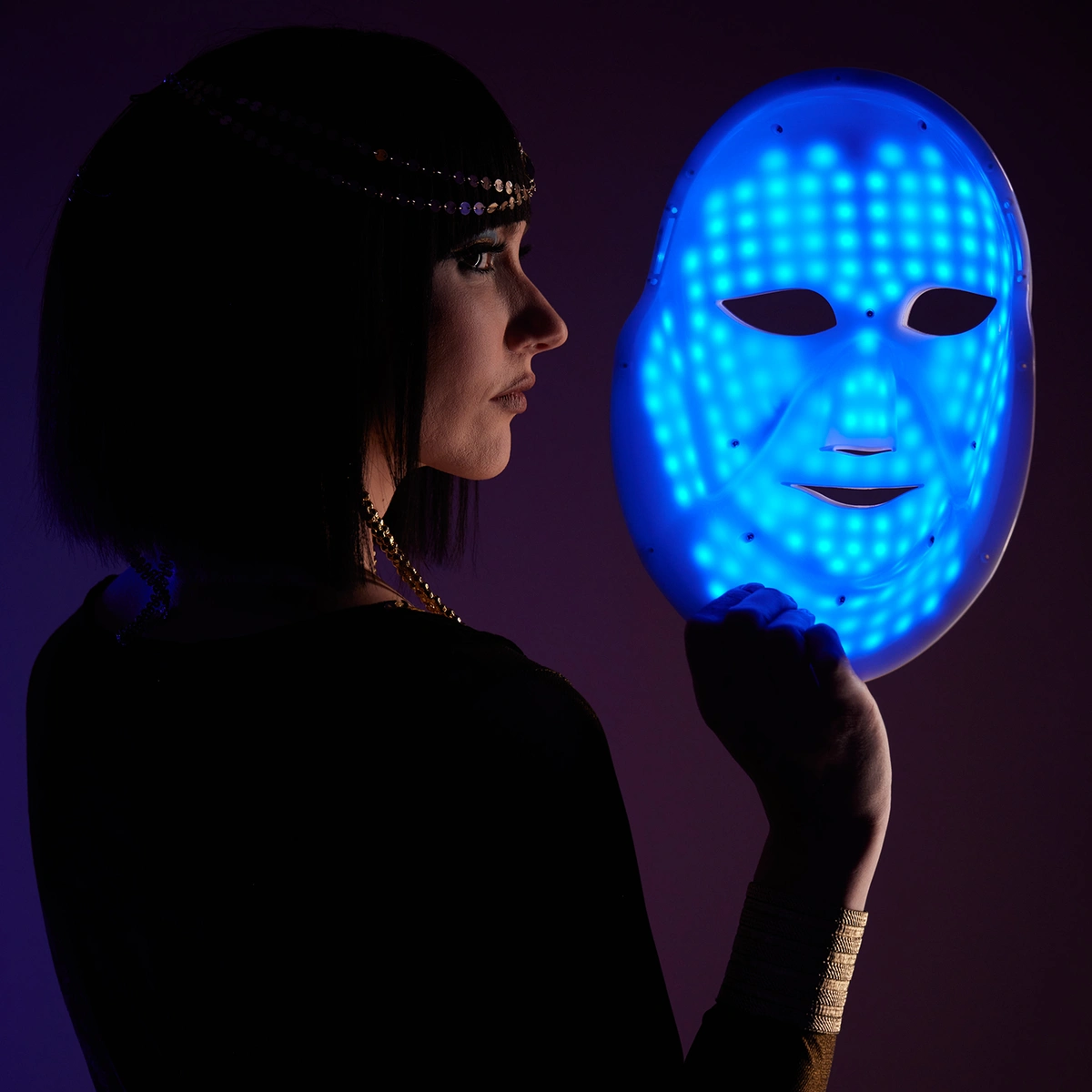
Buudy 192-Diode Clinical Phototherapy Array
Buudy publishes its full technical hardware specifications openly. Packed with a dense matrix of 192 medical-grade LEDs across both face and neck segments, Buudy completely eliminates optical dead zones, guaranteeing that every millimeter of skin receives clinical-grade photonic irradiance.
The Density Advantage
- 192 Total Precision Bulbs: One of the highest density arrays on the UK consumer market.
- Zero Optical Dead Zones: Seamless coverage from upper forehead to clavicle.
- Optimal Irradiance: Delivers sufficient energy to activate mitochondrial ATP repair.
- 100% Spec Transparency: Full disclosure of nanometers, diode counts, and certifications.
Optical Density & Power Benchmarks
Demand High-Density Diodes for Real Cellular Results
Do not let luxury marketing disguise sparse 60-bulb arrays. Upgrade to the 192-diode Buudy system and ensure every centimeter of your skin receives therapeutic energy.
Claim the 192-LED Buudy System (£179) →